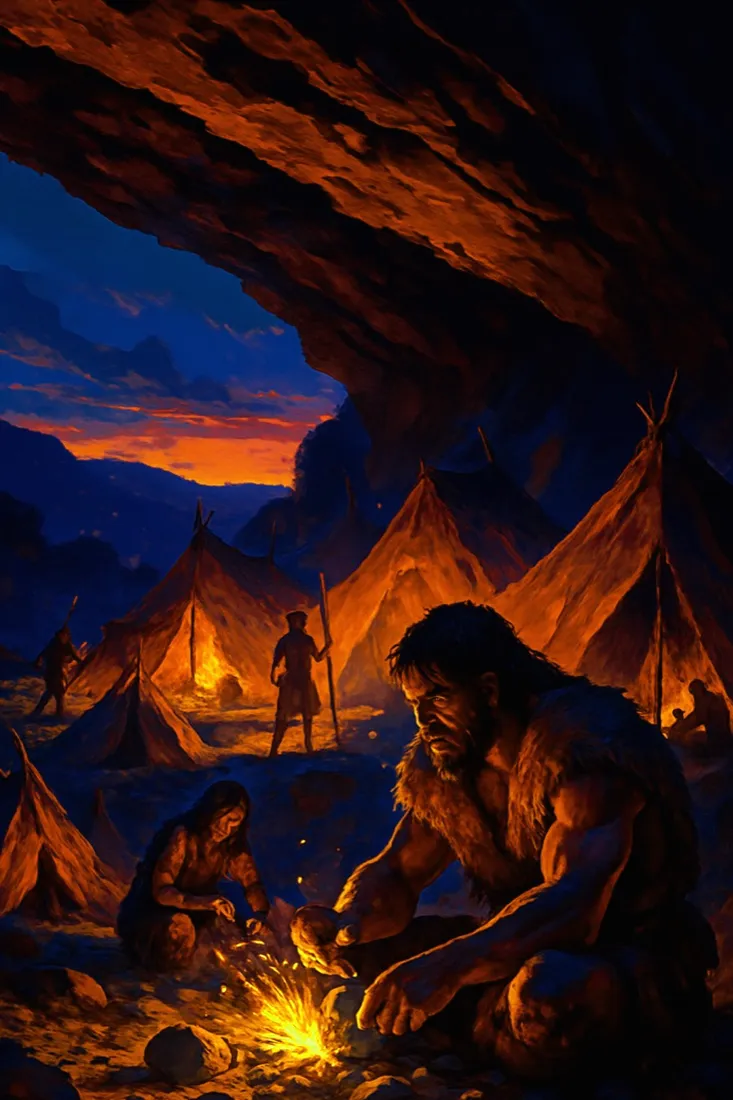
Most civilisation games start with a settlement already standing. Stonies starts earlier still, with a handful of people who know almost nothing. You teach them to gather, hunt and make fire, and only then do huts, storage and a proper camp begin to appear. The official page puts it as being taken back to the earliest era of human history, and that is exactly how the first hours feel.
The publisher, upjers, specialises in calm management games, and Stonies fits that mould. There are no armies marching on you and no rival empires on a world map. Instead there is the slow pleasure of watching a tribe learn, grow and settle. We played it alongside the bigger builders and found it the one we opened to unwind.
Each tribe member has a name and a job
Your tribe is made up of individual men and women, and much of the game is assigning them tasks. One gathers mushrooms and berries, another hunts, another fishes, and as they learn they become better at their work. The tribe also grows: members pair up, children are born and eventually grow up to join in, which gives the settlement a real sense of generations passing.
That personal scale is what makes Stonies different. You are not managing an anonymous population figure; you are looking after people you have watched learn their trade. It sounds sentimental, and it is a little, but it also makes planning more thoughtful. Losing a skilled hunter’s time to the wrong job feels like a genuine mistake rather than a rounding error.
Fire, spears and the first steps of knowledge
Progress comes from knowledge. Your stonies learn to make fire, to craft carving stones, spears and fishing rods, and to hunt with growing skill. Each new skill opens up new activities, and the research is tied tightly to what the tribe actually does day to day. Discovering fire is a small, delightful milestone that changes how your camp works.
Hunting deserves a mention. The game describes sneaking up on rabbits and taking on reindeer and wild boar, and these little outings bring vital food back to camp. They are simple, but they break up the gathering routine nicely. Better tools make hunts more reliable, which gives crafting a clear and practical purpose.
Huts, storage and keeping the larder full
As knowledge grows, so does the camp. You build huts for your tribe, religious sites and places to store food, and storage matters because food can go to waste if you do not look after it. That makes managing supplies a quiet, ongoing puzzle: gather enough, store it properly and keep the hunters and fishers working.
The camp layout is less demanding than in the empire builders, but expansion still brings decisions about what to build next and where. We enjoyed the gentle rhythm of it. Nothing here is urgent in the way an attack or a guild deadline is, so the planning feels relaxed, more like tending an allotment than running a city council.
Where the slow pace becomes a slog
The gentle tempo has a cost. Progress through the eras is slow, and there are stretches where you are simply waiting for food to gather or a task to finish. Players who want visible change every session may find their patience tested in the second week, when the novelty of the first discoveries has passed.
The game’s graphics and interface also feel older than InnoGames’ titles, and there is less to do with other players. On the other hand, the free path felt generous in our weeks, and nothing seemed designed to force a purchase. As a calm companion to a busier builder, or a first civilisation game for someone new to the genre, it works well.
Stonies: laying the first stones
- Give each tribe member one clear job early; gathering mushrooms and berries keeps the camp fed while skills develop.
- Prioritise learning to make fire and craft basic tools, since they unlock the most useful activities.
- Build food storage before stockpiling large amounts, so nothing you gather goes to waste.
- Send hunters after rabbits first and work up to larger animals as their tools and skills improve.
- Add huts steadily so the tribe has room to grow when new members join or children are born.
What we love
- Individual tribe members make the settlement feel personal and alive.
- Learning fire and tools gives early progress real meaning.
- Calm, low-pressure pacing with no armies to worry about.
- The free path felt generous throughout our testing weeks.
What grates
- Progress through the eras is slow, especially in the second week.
- Graphics and interface feel dated beside the InnoGames titles.
- Fewer social features than the bigger empire builders.
The planner Stonies rewards
Stonies is for players who want a gentle, personal settlement game, who enjoy small discoveries and who are happy without battles. It is a lovely first step into the genre and a calm companion for anyone already running a busier empire elsewhere.
Stonies: the finished plan
Stonies does something the empire builders cannot: it makes the start of civilisation feel intimate. Teaching individual people to gather, hunt and make fire is charming, and the calm pace makes it easy to fit into any day. It is slow and a little dated, but as a peaceful, personal builder it earns its place on our shelf.